
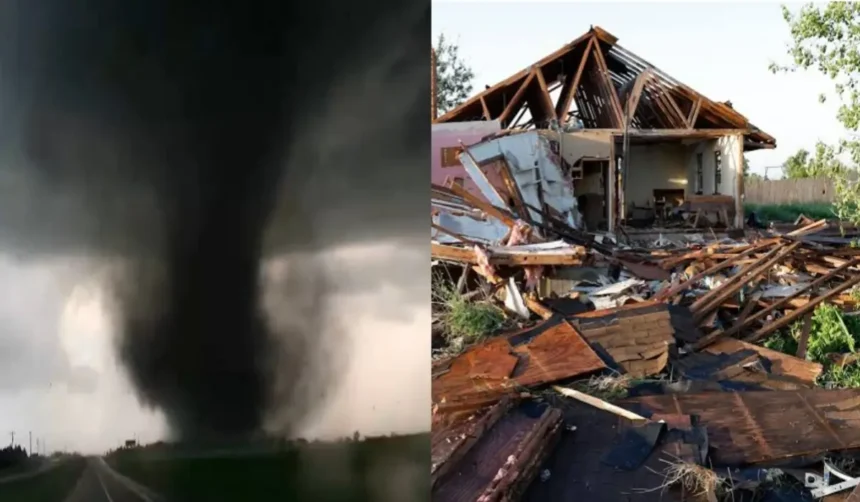
A powerful tornado ripped through parts of Oklahoma in the United States on April 25, 2026, tearing roofs off buildings, destroying homes, knocking down utility poles, and forcing a nearby Air Force base to close its gates. While early warning systems helped authorities issue alerts before the twister struck, the destruction was still significant, underscoring the brutal unpredictability of extreme weather events.
The tornado is the latest in a series of extreme weather events that have hit different parts of the world in 2026, raising fresh questions about how countries prepare for such disasters, and what others, including India, can learn from them.
How America’s Warning System Works
The United States has one of the most advanced tornado early warning systems in the world. The National Weather Service uses Doppler radar, storm spotter networks, and automated alerts to warn communities sometimes 15 to 20 minutes before a tornado makes landfall. In Oklahoma, which sits in the heart of what Americans call Tornado Alley, this system is particularly well-developed, with residents trained from childhood on what to do when a tornado warning sounds.
Where India Stands
India, on the other hand, faces a different but equally serious set of extreme weather threats. Cyclones, floods, heatwaves, and cloudbursts have all become more frequent and more severe in recent years. The India Meteorological Department has significantly improved its forecasting capabilities over the past decade, especially for cyclone warnings along the eastern and western coasts. The IMD now regularly issues cyclone warnings 72 to 120 hours in advance, allowing for large-scale evacuations.
However, challenges remain. Flash flood warnings in hilly states like Uttarakhand and Himachal Pradesh are still not granular enough to protect every village. Heatwave alerts, while improving, do not always reach the most vulnerable populations in rural areas. And unlike in the US, where community shelters are a standard part of urban planning in high-risk zones, India still lacks a robust network of public disaster shelters in many regions.
The Bigger Picture
The Oklahoma tornado serves as a reminder that even the best-prepared countries cannot fully prevent natural disaster. But preparation, early warning, community education, and quick response can dramatically reduce the loss of life. As extreme weather events become a permanent feature of life across the globe, India’s investment in disaster management and climate resilience will be one of the most important long-term priorities for the country.