ECI Announces Phase 3 Schedule of Special Intensive Revision 2026, Electoral Roll Verification to Cover 16 States

The Election Commission has launched Phase 3 of the Special Intensive Revision exercise to verify electoral rolls across multiple states and union territories.

Subhash Kumar
By
Subhash Kumar
Editor in Chief
Subhash Kumar is the founder and editor-in-chief of Timely India (timelyindia.com), India's fastest-growing digital news platform. It is a Google News-approved news publication. With years of...
- Editor in Chief
2 Min Read
Voter List Revision 2026 Phase 3 Schedule OUT
Election Commission of India announces SIR Phase 3 schedule (Photo Credit: Timely India)
Highlights
  • ECI announced Phase 3 schedule of Special Intensive Revision 2026
  • 16 States and 3 Union Territories to be covered
  • Over 3.94 lakh BLOs will conduct door-to-door verification
  • Delhi electoral rolls to be published on October 7, 2026

ECI SIR Phase 3 Schedule 2026: The Election Commission of India (ECI) has officially announced the schedule for Phase III of the Special Intensive Revision (SIR) of electoral rolls. The latest phase of the voter verification drive will cover 16 States and 3 Union Territories, including Delhi.

According to the Election Commission, once Phase 3 is completed, almost the entire country will be covered under the Special Intensive Revision process, except Himachal Pradesh, Jammu and Kashmir, and Ladakh. The schedule for these regions will be announced later due to weather-related conditions.

Official Notice PDF

The Election Commission of India has released the official Phase 3 SIR notification PDF. Candidates and voters can check the complete schedule and guidelines below.
Download Official ECI SIR Phase 3 Notice PDF
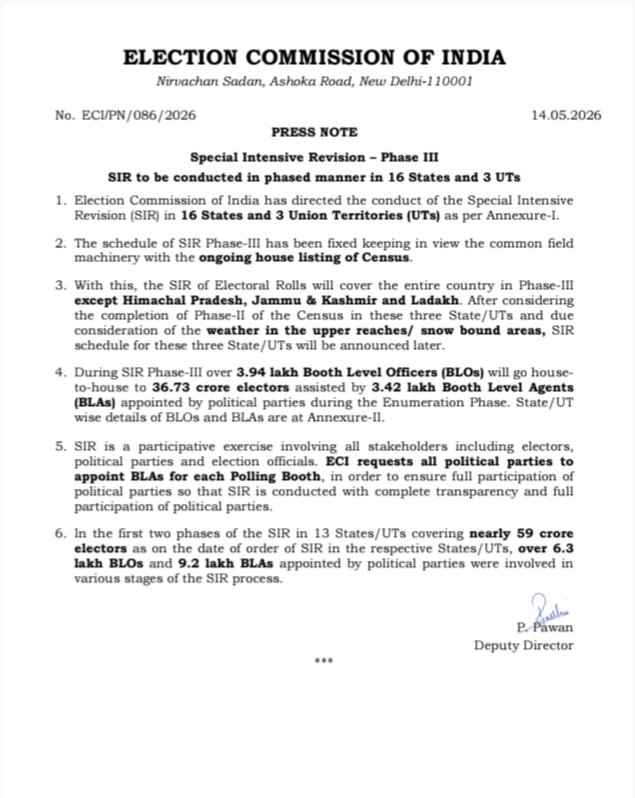
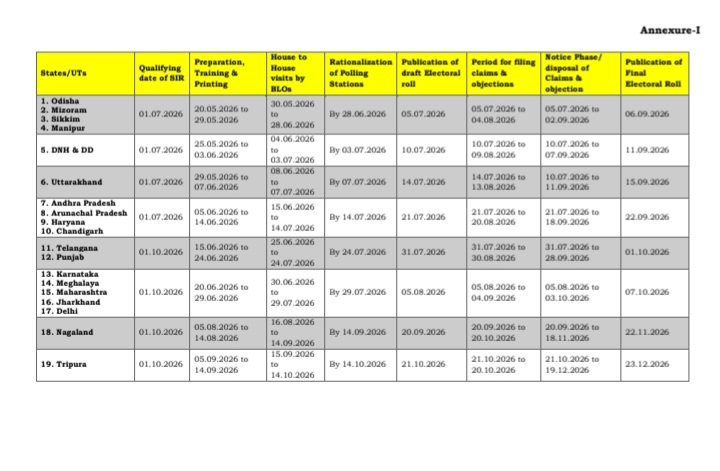
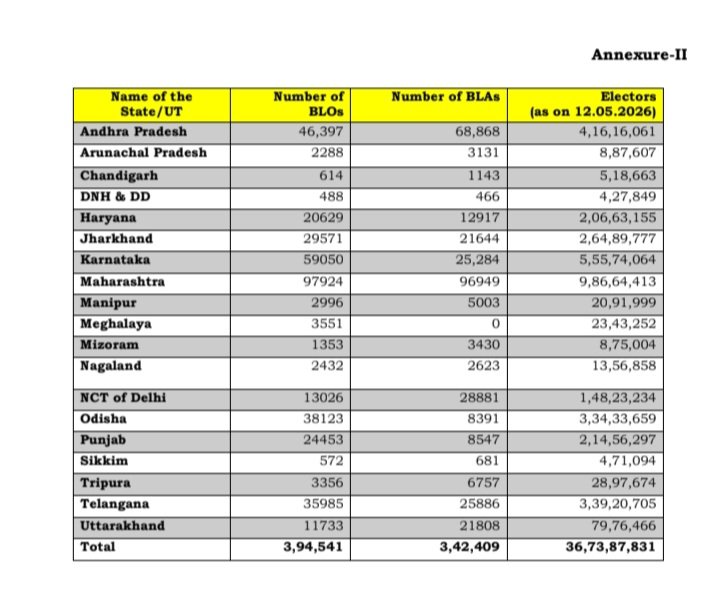
ECI Special Intensive Revision Phase 3 official State wise schedule for Special Intensive Revision ECI shared BLO deployment and elector data for Pha

What is Special Intensive Revision (SIR)?

The Special Intensive Revision is a large-scale voter list verification process conducted by the Election Commission to ensure that only eligible citizens remain included in the electoral rolls while removing ineligible or duplicate entries.

Chief Election Commissioner Gyanesh Kumar appealed to all voters to actively participate in the process and complete their enumeration forms during the revision exercise.

More Than 3.94 Lakh BLOs to Visit Homes

The ECI said over 3.94 lakh Booth Level Officers (BLOs) will conduct door-to-door verification during Phase 3. The exercise is expected to cover nearly 36.73 crore electors across the country.

The voter verification drive will run alongside the ongoing Census-related house listing exercise to ensure better coordination of field staff and resources.

Delhi Also Included in Phase 3

The Election Commission confirmed that Delhi will also be covered under the third phase of the Special Intensive Revision. As per the announced schedule, the final electoral rolls for Delhi are expected to be published on October 7, 2026.

Earlier Phases Reduced Electoral Roll Count

The first phase of the SIR exercise was conducted between June and September 2025, beginning with Bihar ahead of the Assembly elections. The second phase started in October 2025 and covered several major states including Uttar Pradesh and West Bengal.

According to ECI data, the second phase led to a reduction of nearly 10.2 percent in total electors, bringing the voter count down from over 50.99 crore to 45.81 crore.

Why is the ECI Conducting This Drive?

The Election Commission stated that the primary aim of the Special Intensive Revision is to maintain accurate electoral rolls by ensuring that only eligible voters are included and that no fake, duplicate, or ineligible names remain on the voter list.

States Covered in SIR Phase 3

Phase 3 of the revision exercise will cover 16 States and 3 Union Territories. The detailed state-wise schedule is expected to be released separately by the Election Commission.

Read More: NEET-UG 2026 Paper Leak Case: CBI को मिला बड़ा सुराग, पेपर के लिए छात्रों से 2 से 5 लाख रुपये लेने का आरोप

Share This Article
Editor in Chief
Follow:
Subhash Kumar is the founder and editor-in-chief of Timely India (timelyindia.com), India's fastest-growing digital news platform. It is a Google News-approved news publication. With years of experience in digital publishing, content strategy, and education journalism, Subhash founded Timely India with a single goal: to provide accurate, verified, and truly useful news to every Indian reader.Subhash is one of India's most experienced education news reporters, with deep expertise in board examinations and government entrance tests. He personally tracks, analyzes, and reports on every major examination conducted by the National Testing Agency (NTA)- including JEE Main, JEE Advanced, NEET UG, NEET PG, CUET UG, CUET PG, CMAT, GPAT, ICAR AIEEA, CSIR UGC NET, UGC NET, DUET, and all other NTA-administered tests. He also covers all major state and central board examinations including CBSE, ICSE, UP Board (UPMSP), Bihar Board (BSEB), Rajasthan Board (RBSE), MP Board (MPBSE), Maharashtra Board, and every other state board result across India.Beyond education, Subhash writes authoritatively on national affairs, government policy, politics, and current events, bringing the same commitment to accuracy and depth to everything he covers. His editorial philosophy is simple- every article must genuinely help the reader, every fact must be verified from an official source, and every update must reach readers before anywhere else.Subhash oversees the complete editorial operation at Timely India, guiding a growing team of writers and correspondents to uphold the highest standards of digital journalism. He is personally involved in reviewing education and exam content to ensure zero factual errors- a standard that has earned Timely India the trust of lakhs of students, parents, and job seekers across India.Connect with Subhash Kumar through Timely India's official channels or visit timelyindia.com for the latest verified news and education updates.
Leave a Comment